

Mental health is just as important talking to kids about mental health, yet many parents find it difficult to bring up the topic with their children. Whether your child is going through a tough time at school, showing signs of anxiety, or simply seems “off,” starting an open conversation can make a tremendous difference. At Grace Mental Wellness LLC, we believe that early conversations about emotional health are one of the most powerful tools parents have.
This guide will walk you through how to approach these conversations with confidence, care, and clarity no matter your child’s age.
Why Talking About Mental Health Early Matters
Children who grow up in homes where mental health is discussed openly are more likely to seek help when they need it. Research consistently shows that early intervention leads to better outcomes for children struggling with anxiety, depression, behavioral challenges, and more.
When you normalize conversations about feelings and mental wellness, you teach your child that:
- Emotions are valid and worth discussing
- Struggling is a normal part of life
- Help is always available
Avoiding the topic, on the other hand, can cause children to feel shame or confusion about their own emotions making it harder for them to open up when something serious is wrong.
Age-Appropriate Ways to Talk About Mental Health
Not every conversation looks the same. Here is how to approach the topic based on your child’s developmental stage.
Young Children (Ages 3–7): Use simple, concrete language. Instead of saying “anxiety,” say “feeling really nervous or worried.” Use books, puppets, or drawings to help them express emotions. Ask open questions like “How did your tummy feel today?”
School-Age Children (Ages 8–12): At this stage, kids can understand more complex emotional concepts. You can explain that just like the body can get sick, the mind sometimes needs help too. Encourage them to name their feelings and talk about what helps them feel better.
Teenagers (Ages 13–18): Teens need honesty and respect. Avoid lectures. Instead, share your own experiences with stress or anxiety when appropriate, and listen more than you speak. Let them know professional support is always an option not a punishment.
For teenagers, discussing healthy habits such as quality sleep can support conversations about emotional well-being, as research highlights the strong connection between sleep and mental health.
Common Signs Your Child May Be Struggling
Sometimes children cannot put their emotions into words. Watch for these behavioral and physical signs that something may be wrong:
- Sudden changes in appetite or sleep
- Withdrawal from friends or activities they used to enjoy
- Frequent stomachaches or headaches with no physical cause
- Increased irritability, crying, or meltdowns
- Difficulty concentrating in school
- Talking about feeling hopeless or worthless
If these signs persist for more than two weeks, it may be time to speak with a mental health professional.
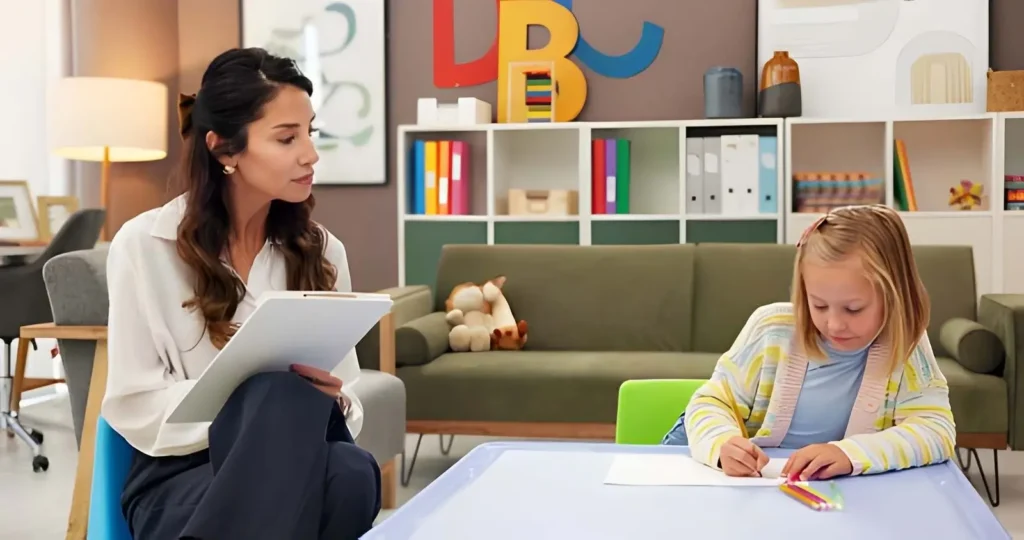
How to Start the Conversation Without Making It Awkward
Many parents worry about saying the “wrong” thing. The truth is, the fact that you are trying matters more than getting every word perfect. Here are some practical ways to ease into the conversation:
Choose the right moment. Car rides, walks, or bedtime routines are low-pressure settings where kids often open up more naturally.
Start with what you observe. Say something like, “I’ve noticed you seem a little sad lately. I just want you to know I’m here.”
Avoid jumping to solutions. Resist the urge to immediately fix things. Children feel heard when you simply listen and validate their feelings first.
Normalize professional help. Explain that talking to a therapist is like going to a doctor it is a sign of strength, not weakness. Learning about behavioral disorders early can also help parents recognize patterns before they escalate.
What to Do If Your Child Refuses to Talk
Some children shut down when parents bring up emotions. This is normal. Here is what you can do:
- Do not force the conversation. Plant the seed and let it grow.
- Offer alternatives like journaling, art, or music as emotional outlets.
- Bring in a trusted adult a school counselor, pediatrician, or therapist.
- Consider family therapy if communication has completely broken down.
When to Seek Professional Support
If your child’s mental health symptoms are interfering with daily life, school performance, friendships, sleep, or eating it is time to seek professional help. Early intervention through therapy, evaluation, or targeted support can prevent minor struggles from becoming major ones.
Professional help is not a last resort. It is a first step toward giving your child the tools they need to thrive emotionally. Issues like autism spectrum disorder or obsessive-compulsive disorder are often first noticed in childhood and the earlier they are addressed, the better the outcomes.
Conclusion
Opening the door to mental health conversations with your child is one of the most loving things you can do as a parent. You do not need to have all the answers you just need to show up, listen, and let them know they are never alone. If you are unsure where to start or need professional guidance, contact us at Grace Mental Wellness LLC. Our team is here to support both you and your child every step of the way.
Frequently Asked Questions
Q1: At what age should I start talking to my child about mental health?
You can start as early as age 3 using simple, age-appropriate language about feelings and emotions.
Q2: What if my child says they’re fine but clearly isn’t?
Do not push. Stay present, keep the door open, and try again during a relaxed moment. Consistency matters more than one big conversation.
Q3: Should I share my own mental health struggles with my child?
Yes, but keep it age-appropriate. Briefly sharing that you’ve felt anxious or sad before helps normalize the experience.
Q4: Can children develop real mental health conditions, or is it just a phase?
Yes, children can develop genuine mental health conditions. Persistent symptoms should always be evaluated by a professional.
Q5: How do I find a child therapist?
Ask your pediatrician for a referral, or reach out directly to a mental wellness clinic in your area.