

Sleep disorder tests rarely come from one single cause. Stress is the obvious one, but it’s far from the only culprit working against a good night’s rest. Irregular schedules, too much screen time before bed, caffeine late in the afternoon, and underlying conditions like anxiety or depression all play a role, sometimes stacking on top of each other. Some people develop sleep issues gradually over years without noticing. Others have a specific trigger, a new job, a health scare, a move across the country. Visit grace mental wellness to see how identifying the actual cause, rather than just treating the symptom of poor sleep, tends to lead to better long-term results.
What Sleep Disorder Symptoms Should You Watch For?
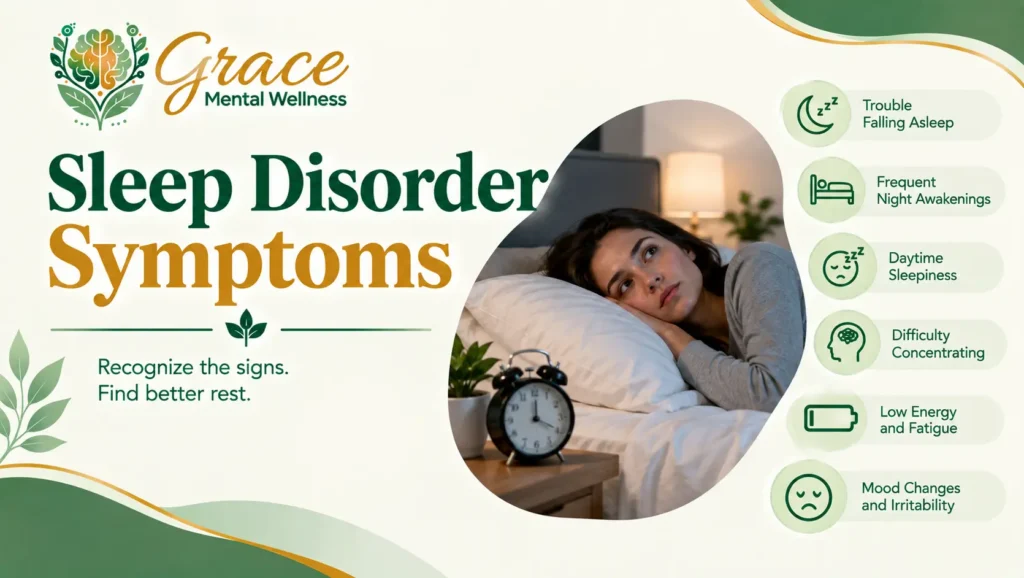
Difficulty falling asleep is the obvious one, but symptoms go well beyond that. Waking up multiple times a night, feeling exhausted even after eight hours, loud snoring, gasping for air, or restless legs that make lying still nearly impossible are all worth paying attention to. Daytime symptoms count too, irritability, trouble concentrating, falling asleep at inappropriate times like during a meeting or while driving. A lot of people normalize these signs for years, assuming it’s just how they are, before connecting the dots back to an actual sleep disorder test that’s treatable.
How Can a Sleep Disorder Test at Home Help?
Home sleep tests have become more accessible in recent years, particularly for detecting sleep apnea. These portable devices monitor breathing patterns, oxygen levels, and heart rate overnight, giving a reasonable snapshot without needing an overnight stay in a lab. This condition connects closely with broader sleep disorder patterns that often go undiagnosed for years. Results aren’t always as comprehensive as a full clinical study, but they’re a useful first step, especially for people hesitant to commit to an in-lab evaluation right away.
Is a Sleep Disorder Test Free Available Online?
Plenty of free screening tools exist online, mostly in the form of questionnaires assessing symptom severity and likelihood of a specific disorder like insomnia or sleep apnea. These aren’t diagnostic on their own, worth being clear about that upfront. Still, they’re a reasonable starting point for figuring out whether a proper evaluation makes sense. Some are backed by research institutions, others less so, so it’s worth sticking to reputable sources rather than random quizzes that promise instant answers.
How Can a Consistent Sleep Schedule Help?
Going to bed and waking up at the same time every day, yes, even weekends, does more for sleep quality than most people expect. It helps regulate your internal clock, making it easier to fall asleep and wake up naturally without an alarm eventually. Wildly inconsistent schedules confuse this internal rhythm, which is part of why weekend sleep-ins often backfire, leaving people wired on Sunday night instead of rested. Consistency beats intensity here. A steady 11pm bedtime usually works better than chasing an extra few hours after a rough week.
Which Relaxation Techniques May Support Better Sleep?
Relaxation techniques work by calming the nervous system enough to actually let sleep happen. Deep breathing exercises, progressive muscle relaxation, and guided meditation are all reasonable starting points, and none require special equipment. Some people find a simple body scan helpful, mentally checking in with each muscle group and consciously releasing tension. Others do better with white noise or a specific breathing pattern like inhaling for four counts and exhaling for six. What works varies quite a bit person to person, so a little experimentation usually pays off.
Can Healthy Sleep Habits Improve Sleep Quality?
Small, consistent habits add up more than people expect. Keeping the bedroom cool and dark, limiting screens for an hour before bed, and avoiding heavy meals late at night all contribute meaningfully over time. Exercise earlier in the day tends to support better sleep too, though working out too close to bedtime can backfire for some people. None of these fix things overnight. Stacked together over a few weeks, though, they genuinely shift how well someone sleeps.
When Should You Consider a Professional Sleep Disorder Test?
If home remedies and lifestyle changes haven’t moved the needle after several weeks, it’s probably time for a professional evaluation. Loud snoring paired with gasping, chronic exhaustion despite adequate hours in bed, or restless legs disrupting sleep nightly are all signs worth bringing to a specialist rather than continuing to self-manage. A proper sleep study can identify conditions like sleep apnea that home remedies simply can’t fix on their own, since they require medical intervention rather than just better habits.
How Can Home Remedies Support Better Sleep?
Home remedies work best as a foundation, not a cure-all for every sleep issue. Herbal teas like chamomile, warm baths before bed, and keeping a consistent wind-down routine all support the body’s natural transition into sleep. Journaling before bed can help offload racing thoughts that otherwise keep people staring at the ceiling. These remedies help most with mild, situational sleep trouble. For anything more persistent, they’re a helpful addition alongside professional care, not a replacement for it.
Final Thoughts
Sleep disorder test are common, but they’re also very treatable once the actual cause is identified, whether that’s stress, an underlying condition, or something more physiological like sleep apnea. Home remedies help with milder cases, but persistent symptoms usually deserve a closer look. Contact us to schedule an evaluation and start working toward sleep that actually feels restful.
Frequently Asked Questions
Q: Can stress alone cause a sleep disorder?
A: Yes, chronic stress is one of the most common contributors to both insomnia and disrupted sleep patterns.
Q: How long should I try home remedies before seeing a professional?
A: If symptoms persist beyond three to four weeks despite consistent effort, it’s reasonable to seek an evaluation.
Q: Are online sleep disorder tests accurate?
A: They’re useful for a general sense of risk, but not a substitute for a proper clinical evaluation.
Q: Does napping during the day affect nighttime sleep?
A: It can, especially longer or later naps, which may make it harder to fall asleep at night.
Q: Can anxiety cause sleep disorders even without depression?
A: Yes, anxiety alone frequently disrupts sleep through racing thoughts and physical tension, independent of depression.