

A psychiatric evaluation for adults is often the first and most important step toward understanding your mental health. It offers a comprehensive look at your emotional well-being, helping identify symptoms such as anxiety, depression, mood changes, or sleep disturbances that may be affecting your daily life. During this process, a licensed mental health professional reviews your history, current concerns, and lifestyle factors to build a clear, personalized picture of what you’re experiencing. Rather than guessing at solutions, this assessment lays the foundation for an accurate diagnosis and effective treatment plan, empowering you to take informed, confident steps toward lasting emotional balance and well-being.
What Is a Psychiatric Evaluation?
A psychiatric evaluation is a comprehensive assessment conducted by a licensed mental health professional, typically a psychiatrist or psychiatric nurse practitioner. It involves a detailed conversation about your current symptoms, medical history, family history, lifestyle, and any past mental health treatment. The goal is to build a complete picture of your mental and emotional health so the provider can identify patterns, rule out other causes, and recommend an appropriate path forward. This process is thorough and may take anywhere from 45 minutes to over an hour.
Why Adults Seek a Psychiatric Evaluation for Adults
People pursue evaluations for many reasons. Some notice persistent sadness or anxiety that doesn’t improve with time. Others experience sudden changes in sleep, appetite, energy, or concentration. Life transitions such as job loss, divorce, grief, or chronic illness can also trigger the need for professional insight. According to the National Institute of Mental Health, nearly one in five U.S. adults lives with a mental illness, which underscores how common and how important these evaluations can be.
What Happens During the Evaluation
During your appointment, the provider will ask open-ended questions about your mood, thoughts, behaviors, and daily functioning. You may be asked about your sleep patterns, substance use, relationships, work stress, and any history of trauma. In some cases, standardized questionnaires or rating scales are used to measure symptom severity, and providers often follow the American Psychiatric Association’s guidelines when conducting a thorough assessment. This isn’t a test you can fail; it’s a collaborative conversation meant to help both you and the clinician understand your experience more clearly.
Signs You May Need an Evaluation
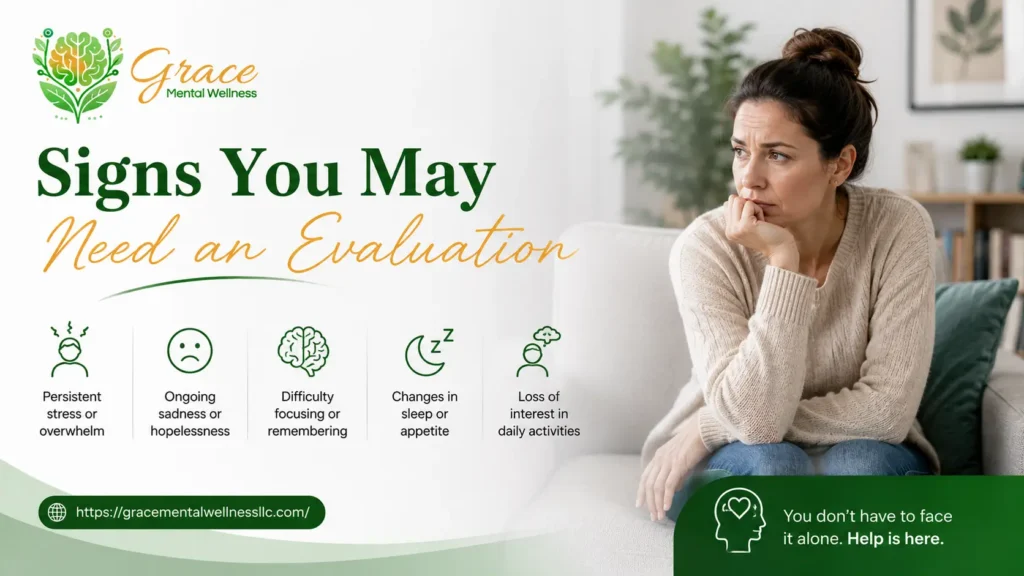
It isn’t always obvious when it’s time to seek a formal assessment. Common signs include ongoing feelings of hopelessness, difficulty functioning at work or school, withdrawing from friends and family, unexplained physical symptoms, or thoughts that feel intrusive or hard to control. Some people are prompted by a primary care doctor’s recommendation, while others reach out on their own after months of feeling unlike themselves. If symptoms are interfering with daily life for more than two weeks, it’s generally worth exploring further.
Benefits of Getting Evaluated
A thorough evaluation provides more than just a diagnosis; it offers direction. Many adults describe a sense of relief simply from being heard and understood by a professional. Beyond that, an accurate assessment helps ensure that any treatment plan, whether therapy, medication, or lifestyle changes, is tailored to your specific needs rather than a generic approach. This personalized foundation often leads to better outcomes and a clearer sense of progress over time.
What to Expect After Your Evaluation
Once the evaluation is complete, your provider will discuss their clinical impressions and offer recommendations. This might include starting therapy, considering medication, adjusting lifestyle habits, or a combination of approaches. You’ll typically leave with a written summary or treatment plan, along with an opportunity to ask questions. It’s important to remember that this is the beginning of an ongoing relationship, not a one-time fix.
Choosing the Right Provider
Finding a provider you feel comfortable with matters just as much as their credentials. Look for someone who listens without judgment, explains things clearly, and takes time to answer your questions. Many people benefit from checking whether a provider specializes in specific concerns, such as anxiety, depression, or trauma. Taking time to research options can make the entire process feel less intimidating and more empowering.
Final Thoughts
Seeking a psychiatric evaluation is a proactive, empowering step toward understanding your mental health. It’s not about labeling yourself; it’s about gaining clarity and building a path toward feeling better. If you’ve been noticing changes in your mood, energy, or daily functioning, don’t wait for things to feel unmanageable. Reaching out for professional support, such as through Grace Mental Wellness, can be the turning point that helps you regain a sense of balance and control over your well-being.
Frequently Asked Questions
1. How long does a psychiatric evaluation take?
Most evaluations last between 45 minutes and 90 minutes, depending on the complexity of your history and symptoms.
2. Do I need a referral to get evaluated?
Not always. Many providers accept self-referrals, though some insurance plans may require a referral from your primary care doctor.
3. Will I be prescribed medication right away?
Not necessarily. Medication is only recommended if it’s appropriate for your situation, and you’ll always have a say in your treatment plan.
4. Is a psychiatric evaluation the same as therapy?
No. An evaluation is an assessment process, while therapy is ongoing treatment that may follow the evaluation.
5. What should I bring to my appointment?
It helps to bring a list of current medications, past treatment history, and any specific symptoms or concerns you’d like to discuss.