

Many people use the terms panic attack vs anxiety attack as if they mean the same thing. They overlap, but they are not identical, and knowing the difference can help you respond with more confidence and get the right care. At Grace Mental Wellness, we often meet people who feel frightened by sudden episodes they cannot explain. This guide covers what happens in each type of episode, what triggers them, how to find relief in the moment, and which treatments can reduce them over time.
What Happens in the Body During a Panic Attack?
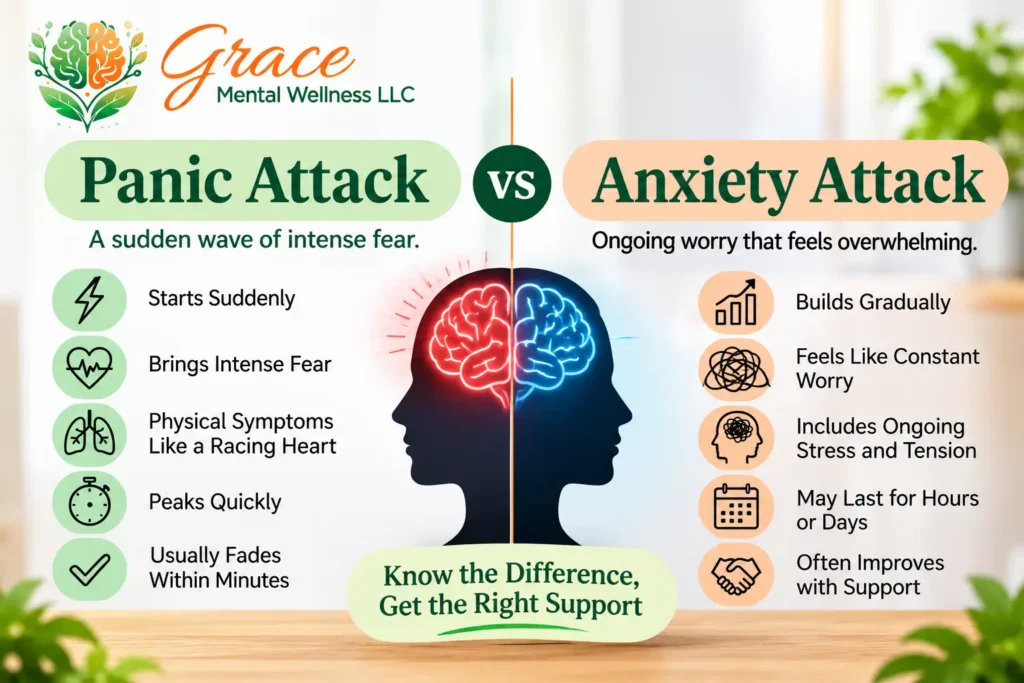
A panic attack is a sudden surge of intense fear that peaks within minutes. It can happen without warning, even during sleep or a calm moment. The body’s alarm system, often called the fight-or-flight response, switches on when there is no real danger.
Stress hormones such as adrenaline flood the body. The heart pounds, breathing speeds up, and blood flow shifts to the muscles. This can cause chest tightness, dizziness, trembling, sweating, tingling hands, and a feeling of unreality. Many people fear they are having a heart attack or losing control. Most attacks fade within 10 to 20 minutes, though the exhaustion afterward can last longer.
How Anxiety Attack Symptoms Develop Over Time
“Anxiety attack” is not a formal diagnosis, but people use it to describe a rise in anxiety that builds gradually. It often starts with a specific worry, such as a deadline, a health concern, or a conflict, and grows as the mind keeps replaying “what if” thoughts.
Early signs include restlessness, tense muscles, racing thoughts, irritability, and trouble concentrating. If stress continues, symptoms can intensify into a period of overwhelming distress. Unlike a panic attack, this build-up may last hours or even days, and it usually has a clear connection to a stressor.
Key Differences Between Panic Attack vs Anxiety Attacks
The easiest way to tell them apart is to look at timing, intensity, and cause.
- Onset: Panic attacks strike suddenly. Anxiety attacks build gradually.
- Trigger: Panic attacks may occur with no obvious cause. Anxiety attacks usually follow a real or imagined stressor.
- Intensity: Panic attacks are typically more severe and physical.
- Duration: Panic attacks peak quickly and pass. Anxiety episodes can linger.
- Diagnosis: Panic attacks are recognized in clinical guidelines. “Anxiety attack” is an everyday term.
Both can feel frightening, and both respond well to treatment.
Common Triggers That Can Cause Sudden Panic Attacks
Panic attacks can seem to come from nowhere, but certain factors raise the risk:
- Major life changes, loss, or ongoing pressure
- Caffeine, nicotine, or other stimulants
- Lack of sleep or physical exhaustion
- Certain medical conditions, such as thyroid problems
- Fear of situations where a previous attack occurred
- Family history of anxiety or panic
- Intense physical sensations, such as a fast heartbeat after exercise
Some people begin to fear the attacks themselves. This fear of having another attack can become a trigger, creating a cycle that is hard to break without support.
How Chronic Stress Contributes to Anxiety Attacks
Long-term stress keeps the nervous system on high alert. When work demands, money worries, caregiving, or relationship strain continue for months, the body rarely gets a chance to recover. Over time, the threshold for feeling overwhelmed drops.
Poor sleep, muscle tension, and constant worry feed one another. A small problem that once felt manageable may suddenly feel impossible. This is how everyday stress can grow into an anxiety attack, and in some cases into a diagnosable anxiety disorder that needs professional care.
Physical and Emotional Symptoms of Panic and Anxiety
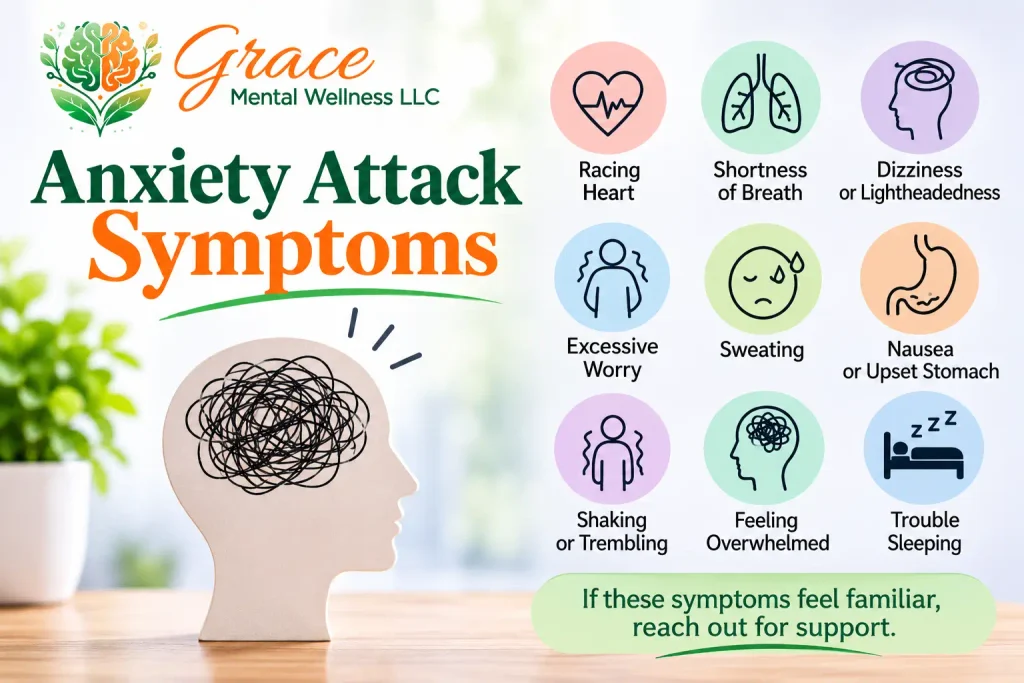
Panic and anxiety share many symptoms, which is why they are easy to confuse.
Physical symptoms:
- Rapid or pounding heartbeat
- Shortness of breath or a choking feeling
- Chest pain or pressure
- Sweating, chills, or hot flashes
- Nausea or stomach discomfort
- Dizziness, shaking, or numbness
Emotional symptoms:
- Sudden terror or a sense of impending doom
- Fear of losing control or “going crazy”
- Feeling detached from yourself or your surroundings
- Constant worry or dread
- Irritability and difficulty focusing
Because chest pain and breathing trouble can also signal medical emergencies, seek urgent care if you are unsure or if symptoms are new and severe.
How to Calm Your Mind During a Panic or Anxiety Attack
Relief often starts with slowing the body down. Try these steps:
- Breathe slowly. Inhale through your nose for four counts, hold briefly, and exhale for six counts.
- Ground yourself. Name five things you see, four you can touch, three you hear, two you smell, and one you taste.
- Remind yourself it will pass. Panic peaks and fades, and it cannot cause lasting harm.
- Relax your muscles. Tense and release each muscle group, starting with your hands and shoulders.
- Move gently. A short walk can burn off adrenaline.
- Reduce stimulation. Step into a quieter space, sip water, and avoid caffeine.
Practicing these skills when you are calm makes them easier to use during an episode.
Treatment Options for Recurring Panic and Anxiety Episodes
If episodes keep returning, professional treatment can make a lasting difference. A thorough psychiatric assessment helps identify whether you are dealing with panic disorder, generalized anxiety, or another condition, and it rules out medical causes.
Common treatment options include:
- Cognitive behavioral therapy (CBT): Teaches you to challenge fearful thoughts and gradually face feared sensations.
- Lifestyle changes: Regular sleep, exercise, balanced meals, and less caffeine support a steadier nervous system.
- Stress management: Mindfulness, relaxation training, and boundary setting reduce daily tension.
- Medication: When symptoms are frequent or severe, medication management can lower their intensity and help therapy work better. Medications are chosen carefully and monitored over time.
Many people see real improvement within weeks when treatment is consistent.
When to Seek Professional Help for Panic and Anxiety Symptoms
Reach out for help if attacks happen repeatedly, if you avoid places or activities out of fear, or if worry disrupts your sleep, work, or relationships. Support is also important if you rely on alcohol or other substances to cope, or if you feel hopeless. If you ever have thoughts of harming yourself, seek immediate help through emergency services or a crisis line. You do not need to wait until symptoms become unbearable to ask for care.
Final Thoughts
Panic attacks and anxiety attacks can feel overwhelming, but they are common, understandable, and treatable. Knowing the differences, spotting your triggers, and learning calming techniques can restore a sense of control. With the right support, most people find that episodes become less frequent and less intense. If you are ready to take the next step, please contact us to schedule a visit with our caring team at Grace Mental Wellness.
Frequently Asked Questions
1. Is a panic attack the same as an anxiety attack?
Not exactly. A panic attack comes on suddenly with intense physical symptoms, while an anxiety attack usually builds gradually in response to a stressor.
2. How long does a panic attack last?
Most panic attacks peak within about 10 minutes and fade within 20 to 30 minutes, though you may feel drained afterward.
3. Can stress cause panic attacks?
Yes. Chronic stress, poor sleep, and major life changes can make panic attacks more likely, even in people who have never had one before.
4. What is the fastest way to stop a panic attack?
Slow breathing and grounding exercises are among the quickest tools. Focus on a long, steady exhale and remind yourself that the feeling will pass.
5. Can panic and anxiety attacks be treated?
Yes. Therapy, lifestyle changes, and medication when needed are effective, and many people see significant improvement with consistent care.