

Managing your mental health usually takes more than one prescription and a pat on the back. It calls for someone actually paying attention over time. Medication management therapy is built around that idea: a provider prescribes something, watches how you respond, then tweaks it. Not once. Again and again, as needed. Regular check-ins mean side effects get caught early, dosages get adjusted, and nothing just sits on autopilot for six months. The whole point is that your plan keeps shifting as you do, so you’re not stuck with something that stopped working back in March.
What Is Medication Management Therapy?
A psychiatrist prescribes medications and provides oversight of the prescribed medications to treat problems like depression, anxiety, ADHD, or bipolar disorder, and honestly, the term “overseeing” carries great value in this context because it hardly remains static in this case. Checkups provide information about the effectiveness of the medications used, side effects, and changes in dosage. So this is not a one-time appointment when you receive medications and leave the doctor’s office and never visit the doctor again. The main goal of this procedure is to find the best effective treatment with minimum negative effects.
Why Personalized Medication Care Matters
Because every person responds differently to drugs, one person’s miracle cure is often useless for someone else. Among other factors, genetics and metabolism play a role. Some other health issues and lifestyle choices, such as sleep patterns or alcohol consumption, are relevant as well. One medication may show results for the first time after some time, which may be frustrating for the patient who has been expecting to see results almost immediately. The National Institute of Mental Health states that each person’s reaction to medication is different, which is the reason why personalized treatment depends on one’s health condition; generic prescription medicine cannot always work.
The Medication Management Process
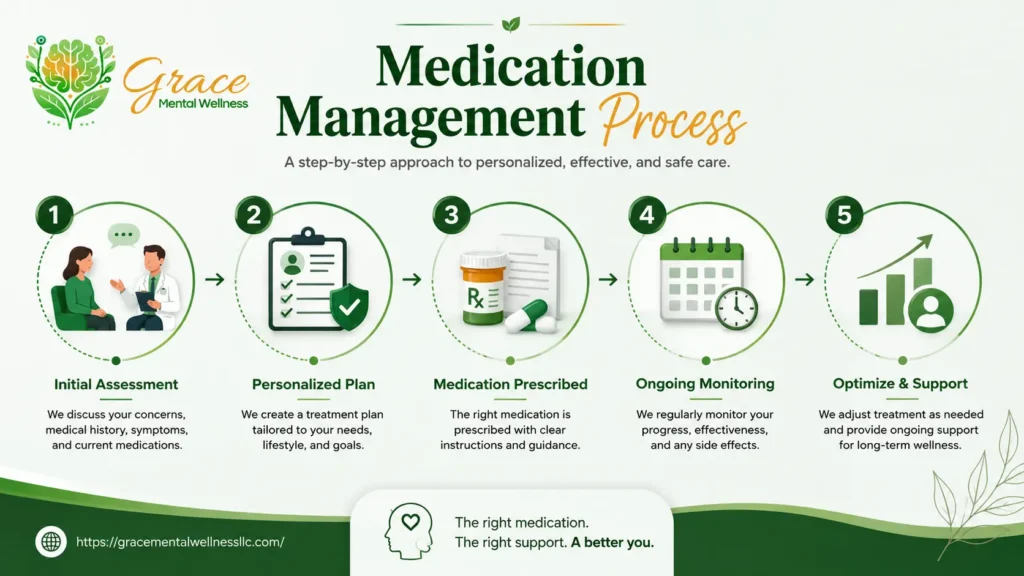
It usually starts with a psychiatric evaluation to figure out if medication even makes sense for you. If it does, your provider walks through the options, benefits, possible side effects, that sort of thing, often following guidelines similar to what the American Psychiatric Association recommends for safe prescribing. Then come the follow-ups. Every few weeks at first, usually. Once things settle down, visits stretch out further apart. But monitoring never really stops completely, because life happens stress, a new job, an illness- and any of that can shift what you need.
Common Conditions Treated
This kind of care shows up for major depressive disorder, generalized anxiety, ADHD, bipolar disorder, PTSD, OCD. Long list, honestly. Medication can genuinely help with a lot of these, especially paired with therapy. That combination of medication plus talk therapy tends to produce better long-term results than either one running solo. Makes sense when you think about it: one treats the biology, the other gives you tools for the day-to-day.
What to Expect at Follow-Up Visits
These are usually quicker than your first evaluation, but don’t mistake short for unimportant. Your provider will ask about mood changes, side effects, how you’re sleeping, whether your appetite’s been off. Be straight with them. If something’s not working, say so; that’s literally what shapes whether the plan stays the same, gets tweaked, or changes entirely. It’s also a good moment to mention anything new going on in your life, even stuff that feels unrelated. It’s often not.
Addressing Side Effects and Concerns
Side effects happen. Drowsiness, nausea, sometimes something more disruptive. A decent provider takes that seriously instead of brushing it off, and works with you on solutions: a different dose, different timing, or a completely different medication if that’s what it takes. Communication matters here more than almost anywhere else in the process. Staying quiet about a side effect because you don’t want to “bother” your provider tends to backfire.
Combining Medication with Therapy
Medication can help on its own, but combining it with therapy can often be more helpful. Medication can reduce symptoms and improve mood, while therapy teaches you practical ways to cope, manage emotions, and understand your thoughts and behaviors. Many mental health providers work together to make sure your care stays connected and consistent. This teamwork can support better and more lasting results than medication alone.
Final Thoughts
Medication management isn’t a quick fix, and it was never meant to be one. It’s a plan that keeps adjusting as you change because you will change, and so will your needs. If you’re wondering whether medication could help you feel like yourself again, reaching out to a provider at Grace Mental Wellness is a reasonable place to start. Expert guidance, real conversation, no pressure to have it all figured out before you walk in.
Frequently Asked Questions
1. How long does it take for medication to work?
It depends on the medication and your individual response. Some medications may help within days, while others can take several weeks before you notice meaningful improvement.
2. Will I need to take medication forever?
Not necessarily. Some people use medication for a short period, while others may need longer-term treatment. Your provider can help determine the best approach based on your symptoms and progress.
3. What if a medication doesn’t work for me?
Finding the right medication can take time. Your provider may adjust the dose, change the medication, or try another option to find what works best for you.
4. Can I stop taking medication on my own?
It’s best not to stop medication without talking to your provider. Suddenly stopping some medications can cause withdrawal symptoms or make your symptoms return. Your provider can help you stop safely if needed.
5. How often will I need appointments?
Appointments may be more frequent when you first start treatment, often every few weeks. Once your symptoms are stable and the medication is working well, your provider may recommend less frequent follow-ups.