


These two conditions often get confused, but Illness Anxiety Disorder vs Somatic Symptom Disorder involves some important differences. Illness anxiety disorder centers on fear of having a serious illness, often with little or no physical symptoms actually present. Somatic symptom disorder involves real physical symptoms, pain, fatigue, digestive issues, paired with excessive worry, time, and energy spent on them, well beyond what the severity alone would explain. Both can bring on genuine physical reactions, a racing heart, trembling, muscle tension, since the nervous system doesn’t always separate anxiety from an actual medical concern. Visit grace mental wellness llc to see how an accurate diagnosis, rather than another round of inconclusive tests, tends to be the thing that finally brings relief.
What Is Illness Anxiety Disorder? Illness Anxiety Disorder vs. Somatic Symptom Disorder
Illness anxiety disorder, sometimes still called hypochondria in casual conversation, involves persistent, excessive worry about having or developing a serious illness, even when medical tests come back clear. The worry itself is the main problem here, not necessarily the physical symptoms, someone might feel completely fine physically and still be consumed by fear that something’s seriously wrong underneath.
What Is Somatic Symptom Disorder?
Somatic symptom disorder is different, though related. Here, the person actually experiences real physical symptoms, pain, fatigue, digestive issues, that cause genuine distress and disrupt daily life, and the anxiety centers around those specific symptoms rather than a general fear of illness. The symptoms aren’t imagined. They’re real, often without a clear medical explanation, which makes the anxiety surrounding them feel even more justified to the person experiencing it.
Key Differences Between the Two Conditions
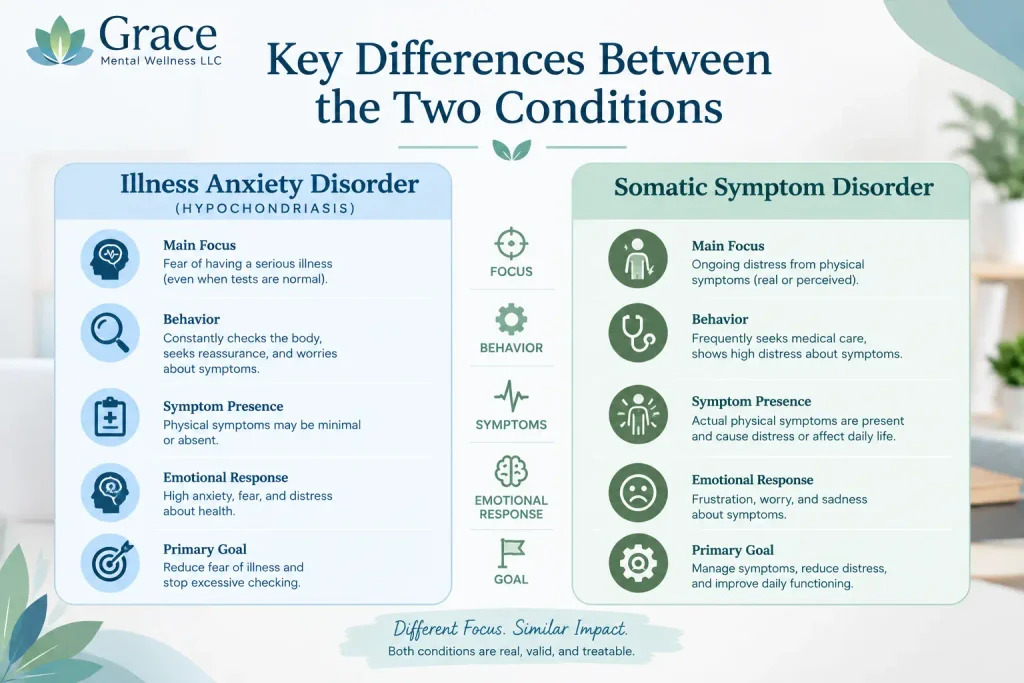
The core distinction comes down to where the focus sits. Illness anxiety disorder centers on fear of having an illness, often with minimal or no physical symptoms present at all. Somatic symptom disorder centers on actual physical symptoms and the excessive worry, time, and energy spent on them. Someone with an illness anxiety disorder might feel a slight headache and spiral into fear about a brain tumor. Someone with somatic symptom disorder might have chronic pain that’s real, documented, and still consumes far more mental energy than the severity alone would explain.
Anxiety Physical Symptoms Common to Both
Both conditions often involve real anxiety, physical symptoms, a racing heart, muscle tension, digestive upset, fatigue that doesn’t improve with rest. The nervous system doesn’t always distinguish well between anxiety about illness and an actual underlying medical issue, which is part of why these conditions get so tangled up with real symptoms in the first place. This overlaps closely with general anxiety, since the physiological symptoms rarely stay neatly contained to one diagnosis.
Recognizing Extreme Anxiety Symptoms
Some people experience genuinely extreme anxiety symptoms tied to these conditions, panic attacks triggered by a new bodily sensation, repeated doctor visits for the same unresolved worry, or avoidance of medical care entirely out of fear of what might be found. A 44-year-old patient once described checking his pulse more than thirty times a day during a particularly bad stretch. That kind of constant monitoring exhausts a person fast, physically and emotionally both.
High Anxiety Symptoms and the Body’s Response
High anxiety symptoms show up physically in ways that reinforce the original fear, trembling, dizziness, chest tightness, all of which can feel alarmingly similar to the very illness someone’s afraid of having. This creates a frustrating loop. The anxiety itself produces symptoms that then get interpreted as evidence something’s medically wrong, which ramps the anxiety up even further.
Understanding Anxiety Shakes and Physical Reactions
Anxiety shakes, trembling hands, a shaky voice, an unsteady feeling throughout the body, are a genuinely common physical response, caused by adrenaline flooding the system during a stress response. They’re not dangerous on their own, though they can feel frightening, especially for someone already primed to interpret physical sensations as signs of illness. Recognizing this as a known anxiety response, rather than something more sinister, is often a meaningful first step.
How These Conditions Are Diagnosed and Treated
Diagnosis typically involves ruling out underlying medical causes first, then a thorough psychiatric evaluation assessing the pattern, duration, and impact of the worry or symptoms. Cognitive Behavioral Therapy is well-supported for both conditions, helping reframe catastrophic thinking about illness and reducing the compulsive checking or reassurance-seeking that tends to keep the cycle going. Our services page outlines what this evaluation process looks like for conditions centered on health anxiety specifically.
When to Seek Professional Help
If worry about illness, or physical symptoms tied to that worry, has started interfering with work, relationships, or basic daily functioning, it’s worth getting a proper evaluation rather than cycling through doctor visits that keep coming back clear. These conditions respond well to treatment, but they rarely resolve on their own without it.
Final Thoughts
Illness anxiety disorder and somatic symptom disorder look different on the surface but both carry real, exhausting weight for the people living with them. Getting an accurate diagnosis is the clearest path toward actually feeling better, in both body and mind. Contact us to schedule a consultation and start sorting out what’s actually going on.
Need expert support? Learn more about our anxiety disorder treatment in San Antonio, TX, or book an appointment with Grace Mental Wellness today.
Related Articles
- How Does Illness Anxiety Disorder VS Somatic Symptom Disorder?
- What Are the Keys of Somatic Symptom Disorder vs Anxiety Disorder?
- Therapist for Social Anxiety: Treatment Options and Benefits
- Mental Health Professional for Anxiety in the USA: Find Support
Frequently Asked Questions
Q: What’s the main difference between these two disorders?
One centers on fear of illness, the other on real physical symptoms and excessive worry about them.
Q: Are the physical symptoms in somatic symptom disorder real?
Yes, they’re genuine and often documented, just accompanied by distress beyond what severity explains.
Q: Can anxiety alone cause physical symptoms like shaking?
Yes, trembling and a racing heart are common stress responses tied to anxiety itself.
Q: Do these conditions respond well to therapy?
Yes, Cognitive Behavioral Therapy is well-supported for both, reducing checking and catastrophic thinking.
Q: Should someone stop seeing doctors if diagnosed with either?
No, treatment reduces excessive checking, not appropriate medical care when it’s actually needed.