

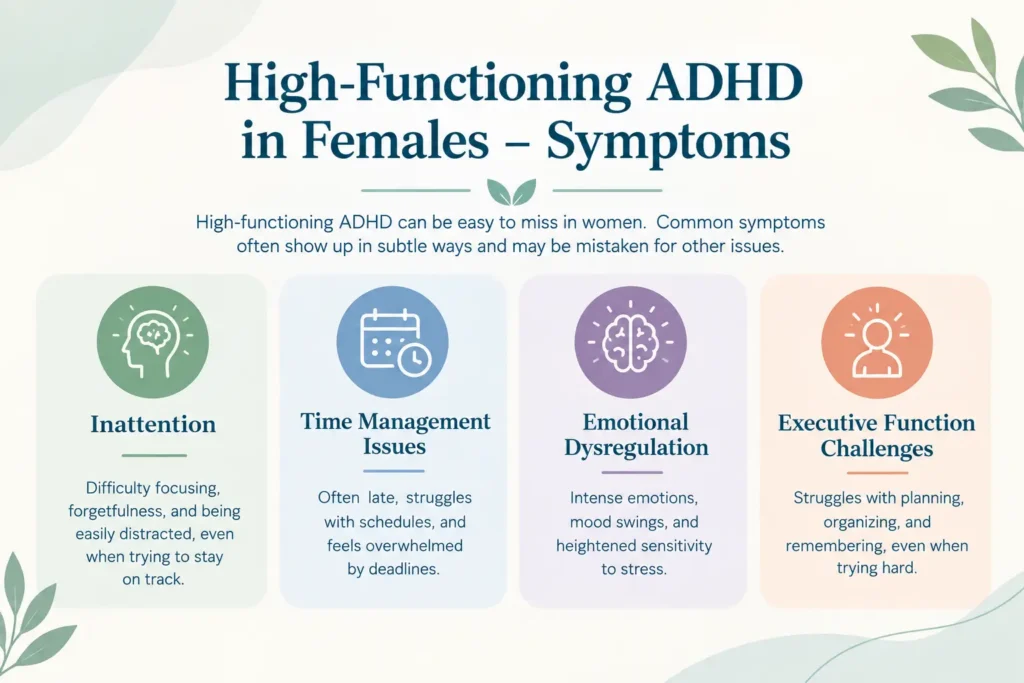
High-functioning ADHD in females rarely looks like the stereotype, it looks more like someone holding everything together while quietly exhausted underneath. Chronic disorganization, time blindness, emotional sensitivity, and a mind that won’t fully quiet down at night are all common, yet they’re easy to mistake for stress or anxiety instead. A lot of women reach their thirties or forties before getting diagnosed, often only after recognizing the same pattern in their own child. Masking keeps the struggle hidden, color-coded planners, late nights finishing what should’ve taken half the time, perfectionism standing in for actual support. Visit grace mental wellness to see how naming this pattern finally opens the door to real answers.
What Is High-Functioning ADHD in Females?
High-functioning ADHD in women doesn’t look like the stereotype most people carry around, a hyperactive kid bouncing off classroom walls. It looks more like someone who’s managing, mostly, while quietly exhausted from constant internal compensation nobody else can see. She’s holding down a job, keeping relationships afloat, maybe even excelling outwardly, all while her brain feels like it’s running six tabs that never fully close.
Why ADHD Symptoms in Women Look Different
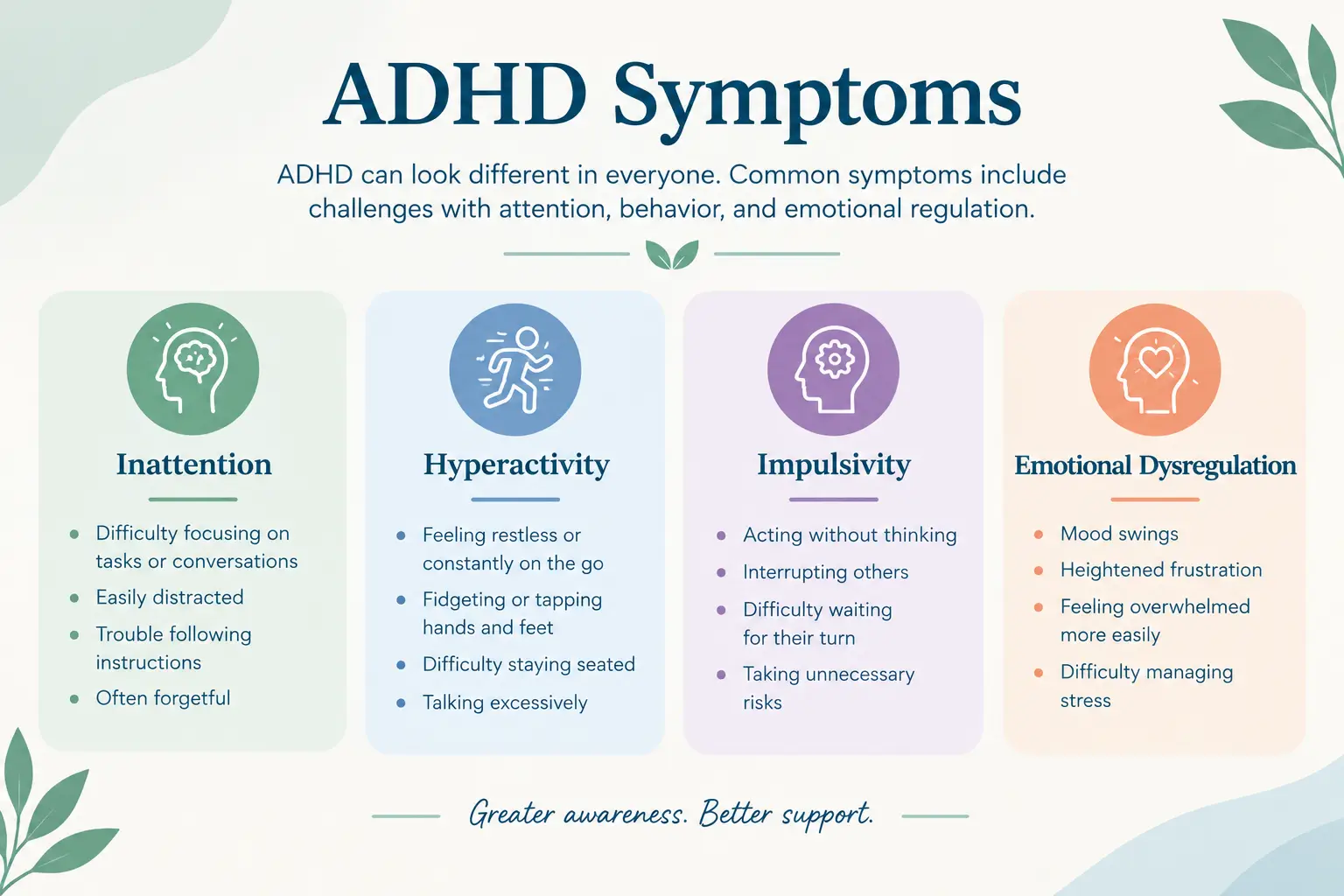
ADHD symptoms in women often skew inattentive rather than hyperactive, daydreaming, losing track of conversations, struggling to finish tasks once the initial interest fades. Boys get diagnosed younger partly because hyperactive symptoms are harder to miss in a classroom. Girls, meanwhile, learn early to mask, stay quiet, overcompensate, blend in, which means the condition often slides under the radar for years, sometimes decades, before anyone names it.
Common Signs of ADHD in Adult Women
Chronic disorganization despite genuinely trying hard, losing items constantly, keys, phone, that one important form, and a running mental to-do list that never actually empties out are all common. Emotional sensitivity runs high too, small criticisms landing harder than they probably should, frustration tipping over faster than expected. A 36-year-old teacher once described crying in her car after misplacing a grading rubric, not because the rubric mattered that much, but because it felt like one more proof she couldn’t keep anything together.
What Are the Symptoms of ADHD You Might Be Missing
Beyond the obvious stuff, trouble focusing, forgetfulness, there’s a quieter layer. Time blindness, chronically underestimating how long tasks take, showing up late despite leaving what felt like plenty of time. Hyperfocus on interesting tasks paired with near-total inability to start boring ones. Sensory sensitivity, certain fabrics, sounds, or lighting becoming unbearable on bad days. These symptoms rarely show up in isolation. They stack, and the stacking is exhausting in ways that are hard to explain to someone who hasn’t lived it.
The Mask of High-Functioning ADHD
“High-functioning” is a bit of a misleading label, honestly. It doesn’t mean the struggle is mild, it means the struggle is hidden, often behind years of overcompensating strategies, color-coded planners, extreme perfectionism, staying up late to finish what should’ve taken half the time. From the outside, everything looks fine. Inside, it can feel like barely holding something together through sheer force of will.
Why Diagnosis Gets Missed in Women
A lot of women reach their thirties or forties before getting diagnosed, often after a child’s ADHD evaluation prompts a moment of recognition, wait, that sounds like me too. Healthcare providers historically underdiagnosed ADHD in women, partly due to research skewed toward male presentations, partly because inattentive symptoms just don’t trigger the same red flags hyperactive ones do. This delay means a lot of women spend years attributing their struggles to laziness, anxiety, or simply not trying hard enough.
The Overlap With Anxiety and Depression
Undiagnosed ADHD often gets tangled up with anxiety or depression, since the chronic stress of masking and compensating takes a real toll over time. This connects closely to patterns tied to major depressive disorder, since years of feeling like you’re constantly failing to keep up wears down self-esteem in ways that mimic or trigger depressive symptoms. Treating anxiety or depression alone, without addressing the underlying ADHD, often leaves something important unaddressed.
How ADHD Affects Sleep and Daily Functioning
A racing mind at bedtime, difficulty winding down, and inconsistent sleep schedules are all common among women with ADHD, partly because the same difficulty regulating attention during the day carries into difficulty regulating the transition to sleep at night. This overlaps with sleep disorders fairly often, and poor sleep in turn worsens ADHD symptoms the next day, creating a cycle that’s hard to break without addressing both.
Getting an Accurate Diagnosis and Treatment
A proper ADHD evaluation for adult women typically includes a detailed history, current symptoms, and a look back at childhood patterns that might not have been recognized at the time, report cards, old complaints about daydreaming, things that seemed minor then but fit the picture now. Our services page outlines what this evaluation process involves. Treatment often combines medication with strategies tailored specifically to how an ADHD brain actually works, not generic productivity advice that assumes everyone’s wired the same way.
Final Thoughts
High-functioning ADHD in women hides behind competence for years, sometimes a lifetime, before anyone, including the woman herself, recognizes it for what it is. Looking capable on the outside doesn’t mean the inside isn’t exhausting. Contact us to schedule a consultation and start getting real answers instead of more self-doubt.
Need expert support? Learn more about our behavioral disorder treatment in San Antonio, TX, or book an appointment with Grace Mental Wellness today.
Related Articles
- ADD & ADHD Evaluation for Adults: Get Clarity Today
- 7 Signs of High-Functioning Anxiety You Shouldn’t Ignore
- What Is the Most Common Behavioral Disorder in Adults?
- Behavioral Disorder Treatment Children in San Antonio
Frequently Asked Questions
Q: Why is ADHD often missed in women until adulthood?
Inattentive symptoms blend into daily life quietly, rarely triggering the obvious red flags hyperactive behavior tends to raise early.
Q: Can high-functioning ADHD still seriously affect daily life?
Yes, it just means the struggle stays hidden behind masking, not that the underlying difficulty is actually mild.
Q: Does ADHD in women often get mistaken for anxiety?
Often, since years of compensating and masking create chronic stress that closely resembles or feeds into anxiety symptoms.
Q: Can a child’s ADHD diagnosis reveal a parent’s undiagnosed ADHD?
Yes, many women first recognize their own lifelong symptoms only after watching their child get evaluated.
Q: Is medication the only treatment option for adult ADHD?
No, medication often works best combined with strategies built around how an ADHD brain actually functions daily.