
The phrase sounds harmless, almost flattering. A high-functioning alcoholic holds down a job, pays the bills, shows up to the kid’s recital, and still depends on alcohol to get through the day. There’s no stumbling or public disaster, which is exactly why it goes unnoticed for years. Nobody’s checking a report card on someone who seems fine. Still, the label isn’t a medical diagnosis. Clinicians call it functional alcoholic signs use disorder, and it exists on a spectrum from mild to severe. Understanding the pattern helps you see past the polished surface, whether you’re worried about yourself or someone you love. At Grace Mental Wellness, we see how often people wait because they assume they’re not “bad enough.”
Early Behavioral Changes That May Indicate Alcohol Dependence
Watch for patterns, not single nights. Drinking becomes the reward after every hard day, then the default every day. Someone might pour a drink the minute they get home, always have one in hand at gatherings, or get irritable when plans change and alcohol isn’t available. They may hide bottles, switch stores so the cashier won’t notice, or say “just one” and mean four. Rules appear: never before noon, only wine, only weekends. Those rules usually bend. Many of the services we offer start with a simple assessment because these small shifts, easy to explain away individually, tell a clearer story when someone looks at them together.
Physical Symptoms Linked to Functional Alcoholism
The body keeps its own record. Tolerance is a big one. Needing several drinks to feel what others feel after one isn’t a badge of honor. Other signs include shaky hands in the morning, sweating, nausea, or trouble sleeping when alcohol wears off. Some people notice a flushed face, bloating, weight changes, or stomach pain that never fully goes away. Frequent hangovers get brushed off as a rough night. They’re not always that. Withdrawal symptoms in particular suggest physical dependence, and that deserves attention from a professional. Quitting abruptly can be dangerous, so supervised alcohol dependence treatment is the safer route when physical symptoms are present. Don’t white-knuckle it alone.
How Drinking Habits Affect Work and Daily Responsibilities
Here’s the twist. Work often looks fine on paper. Performance reviews are decent, deadlines get met. But look closer. Maybe Monday mornings come with sick days, lunches stretch into long ones with a drink, or someone leaves meetings early to get home. Mistakes creep in, small ones at first, like a forgotten email or a missed detail. At home, chores slide, conversations get shorter, and evenings revolve around when the drinking starts. Kids notice. Partners definitely notice. Plenty of people compensate by overworking, which keeps up the appearance. That effort is exhausting, and it can’t run forever. Eventually something gives, usually health or a relationship.
Emotional Warning Signs Behind Hidden Alcohol Use
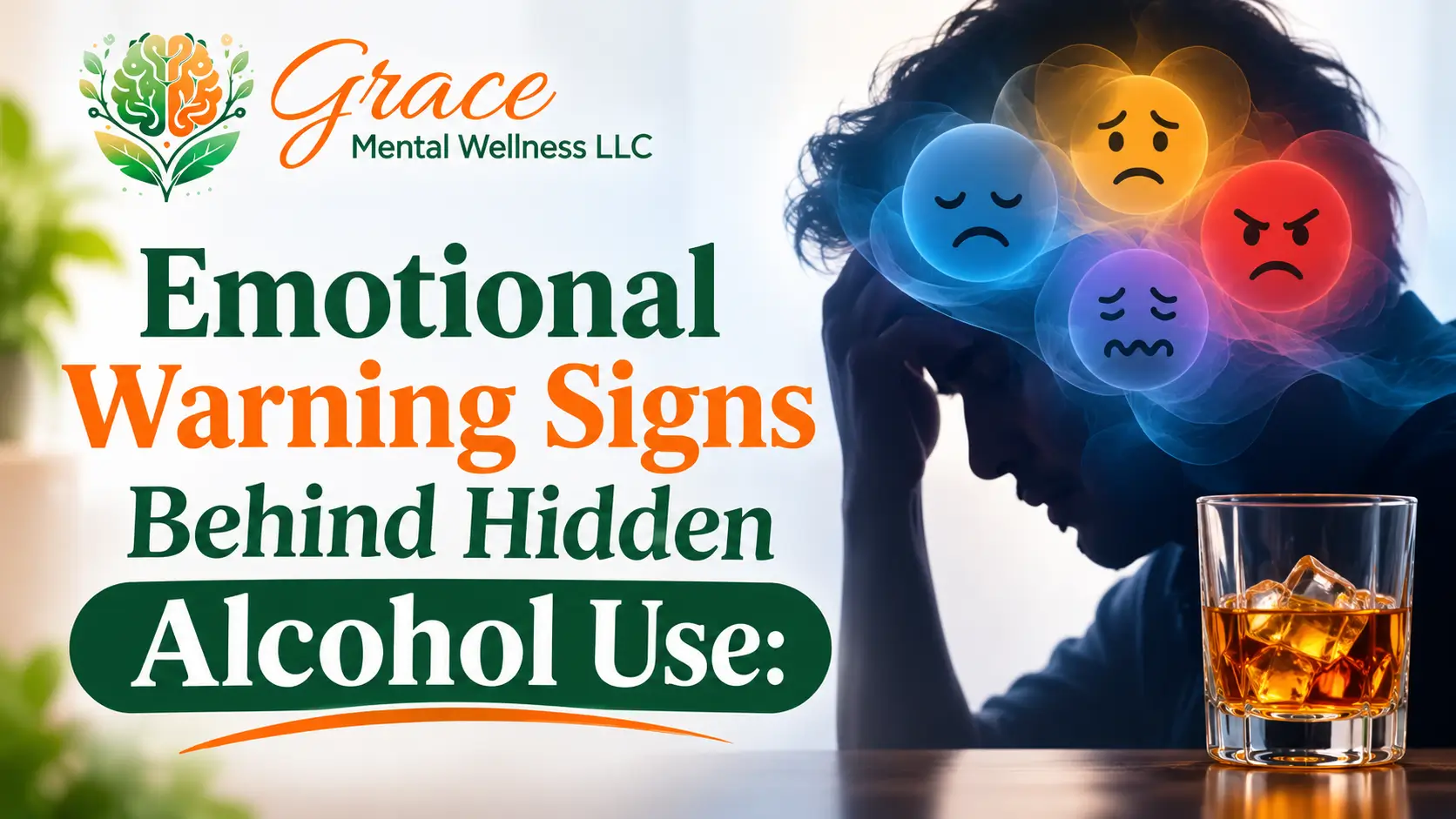
Alcohol often covers something. Anxiety, loneliness, old grief, work pressure, a marriage that went quiet. People say they “need” a drink to unwind, which sounds like a joke until it isn’t. You might see mood swings, defensiveness when the subject comes up, guilt after drinking, or a flat, numb stretch the next day. Some people drink to sleep, then feel worse. Others get oddly secretive about something as ordinary as a glass of wine. Depression and alcohol feed each other, and treating one without the other rarely holds. If a loved one seems low and keeps drinking, pay attention to that combination. It matters more than the number of drinks.
Why Functional Alcoholic Signs Often Deny Their Drinking Problem
Denial isn’t lying, exactly. It’s a story that makes sense from the inside. “I never miss work.” “I only drink beer.” “My dad drank way more.” Comparisons to the worst-case drinker are common, and they’re comforting. There’s also real fear underneath. Admitting a problem feels like admitting failure, and for high achievers that’s a tough pill. Stigma doesn’t help, and neither does a culture that jokes about wine o’clock. Friends and coworkers often join in, so the behavior looks normal. If you’re confronting someone, skip the lecture. Pick a calm moment, describe what you’ve seen, and lead with concern. Expect pushback the first time. Sometimes the second.
Long-Term Health Risks of High-Functioning Alcoholism
Years of steady drinking add up, even when life looks stable. The liver takes the first hit, with fatty liver, hepatitis, and eventually cirrhosis. Blood pressure climbs. Heart muscle weakens. The risk of several cancers, including breast and colon, goes up. Memory and thinking can suffer, and brain scans in long-term heavy drinkers often show shrinkage. Mental health takes a toll too, with higher rates of depression and anxiety. Then there are accidents: falls, car crashes, one bad decision after the third glass. The scary part is how quiet it all is. Many people feel okay until a routine blood test says otherwise. Getting checked sooner gives your body more room to recover.
When Should Someone Seek Professional Alcohol Treatment?
Don’t wait for rock bottom. It’s a myth, and a dangerous one. Consider reaching out if you’ve tried to cut back and couldn’t, if drinking is hurting your health or your relationships, if you need more to get the same effect, or if you feel shaky or anxious without it. Also if people close to you have raised concerns more than once. Start with a primary care doctor or a mental health provider who can screen for alcohol use disorder. If you’re having severe withdrawal symptoms like confusion, seizures, or hallucinations, that’s an emergency, so call 911. For anyone unsure, one honest conversation with a professional costs far less than another five years of guessing.
Treatment Options That Help People Overcome Alcohol Dependence
There isn’t one path, and that’s good news. Medically supervised detox handles withdrawal safely. Medications like naltrexone and acamprosate reduce cravings, and a prescriber can tailor the choice to your health history. Therapy, especially cognitive behavioral therapy, helps untangle triggers and build new responses. Outpatient programs let you keep working and stay home, which suits many high-functioning people. Residential care offers more structure for severe cases or past relapses. Support groups like AA or SMART Recovery add community. Most successful plans combine two or more of these. And they adjust over time. What you need in week one won’t be what you need in month six, and that’s normal, not failure.
Final Thoughts
Functional doesn’t mean fine. The signs are often small: a drink that’s always there, a mood that shifts without it, a body that’s quietly paying the price. Spotting them early gives you more options and a gentler road. If any of this sounds familiar, you don’t have to sort it out alone, and you don’t need a crisis to justify asking. Contact us to talk through next steps with a caring team that listens first. Whether the worry is about you or someone you love, the first call is usually the hardest. After that, things tend to get lighter.
Frequently Asked Questions
1. What is a functional alcoholic?
It’s someone who keeps up work and home responsibilities while being dependent on alcohol. Clinically, it falls under alcohol use disorder.
2. What are the most common functional alcoholic signs?
Common signs include needing a drink to unwind, high tolerance, hiding drinking, defensiveness, and morning shakiness or nausea.
3. Can a functional alcoholic stop drinking without help?
Some try, but heavy drinkers can face dangerous withdrawal. Medical guidance is safer and improves the odds of lasting change.
4. Why do functional alcoholics deny having a problem?
Success at work and home makes the drinking feel harmless. Shame, fear, and comparing themselves to heavier drinkers keep denial in place.
5. How can I help someone who may be a functional alcoholic?
Choose a calm moment, share specific concerns without judgment, and encourage a professional evaluation. Be patient, since it may take more than one conversation.