

Depression is heavy. Isolating, too, and hard to explain to people who haven’t been through it. Still, it’s one of the most common mental health conditions out there, and also one of the most treatable, even when it doesn’t feel that way in the moment. Depression counseling gives you a structured space to actually work through what you’re feeling, with someone trained to understand it rather than just nod along politely. Grace Mental Wellness gives you access to a steady, judgment-free place to untangle what’s going on and figure out what actually helps, one session at a time.
Understanding Depression
It’s not just sadness. Depression is more persistent than that; it settles into your mood, your energy, how you think, even your physical health in ways that catch people off guard. Ongoing sadness, losing interest in things you used to enjoy, sleep that’s off in either direction, fatigue that doesn’t lift, trouble concentrating, feeling worthless for no clear reason. Any of that sound familiar? The National Institute of Mental Health lists depression as one of the most common conditions affecting adults across the country. Common doesn’t mean easy, though, and it definitely doesn’t mean you should just push through it alone.
What Is Depression Counseling?
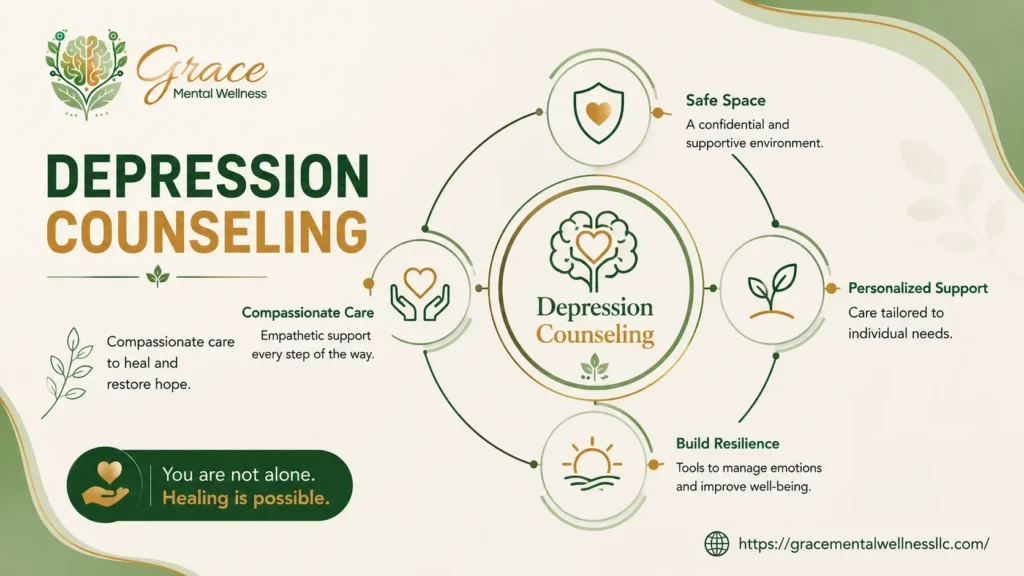
Depression counseling is talk therapy, specifically aimed at the thoughts and behaviors feeding into depressive symptoms. A therapist sits with you, week after week usually, and helps you notice patterns you might not catch on your own. Coping strategies get built along the way, gradually, not all at once. Underlying stuff old wounds, current stressors, whatever’s actually driving things gets processed too, at whatever pace makes sense for you. Sessions run weekly or every other week, and honestly, the shape of it depends entirely on what you need and how you’re doing that particular week.
Common Approaches Used in Counseling
There’s more than one way in. Cognitive Behavioral Therapy, or CBT, works on reframing negative thought patterns the loop where one bad thought spirals into ten before you’ve even noticed it happening. Interpersonal Therapy leans into relationship dynamics instead, since a lot of depression gets tangled up in how we relate to people around us. Behavioral Activation is another solid option, basically nudging you back toward activities you’ve pulled away from, because withdrawal tends to feed the depression rather than relieve it. Different approaches work for different people, and a good therapist adjusts rather than forcing one method.
Signs You Might Benefit from Counseling
A lot of people wait way longer than they should, hoping it’ll just pass on its own. Sometimes it does. Often it doesn’t. Watch for low mood that’s stuck around for more than two weeks, trouble functioning at work or in your relationships, pulling away from people you’d normally lean on, appetite or sleep that’s shifted noticeably, or a heaviness that feels like hopelessness settling in. None of that means something’s broken in you. It means it’s time to do something about it, and reaching out is usually a lot less complicated than people expect it to be.
What Happens in a Counseling Session
Pretty simple, really an open conversation, no judgment, about whatever’s going on in your life and how it’s been landing on you emotionally. Your counselor listens, asks the kind of questions that make you pause and think, and slowly helps map out patterns you didn’t see clearly before walking in. Sessions build toward something over time, even if progress doesn’t feel linear week to week. Better mood. Stronger relationships. Daily habits that actually support you instead of working against you quietly in the background.
The Role of Consistency in Treatment
One conversation rarely does it, no matter how good that first session feels. Counseling works best as something you keep showing up for, not a single fix-it appointment you check off a list. Trust with your counselor takes a bit to build; that’s normal, not a red flag or a sign it’s not working. Some people notice small shifts within a few weeks of starting. The bigger changes, the ones in mood and outlook that actually stick around, usually take longer. Months, sometimes, and that’s completely okay.
Combining Counseling with Other Support
For some people, counseling alone is enough. Genuinely enough, no extra pieces needed. Others do better pairing it with medication management, or with lifestyle changes: better sleep, more movement, actual social connection instead of isolating further into old patterns. There’s no single right combination here, and what works for one person might not fit another at all. Your counselor can help you figure out whether adding something else makes sense for where you’re at right now, without pushing you toward anything you’re not ready for.
Final Thoughts
Depression counseling is a compassionate path forward, not a magic fix. It’s built on consistency, on being understood, on support that’s actually tailored to you rather than generic advice pulled from a pamphlet. You don’t have to carry this by yourself; reaching out is strength, not weakness, whatever it might feel like in the moment you’re sitting in. Healing isn’t a straight line, but it is possible, and having the right person alongside you tends to make all the difference over time.
Ready to Talk to Someone?
You don’t have to figure this out alone. Reach out to Grace Mental Wellness today and take the first step toward feeling like yourself again.
Frequently Asked Questions
1. How long does depression counseling typically last?
It depends on the person. Many people attend weekly sessions for a few months, while others may need longer support.
2. Is depression counseling effective without medication?
Yes. Many people feel better with counseling alone. Some may benefit from both counseling and medication.
3. What if I don’t feel comfortable with my first counselor?
That is okay. Finding a counselor you trust and feel comfortable with is important. You can try another counselor if needed.
4. Can counseling help with mild depression too?
Yes. Counseling can help with mild, moderate, and severe depression. Getting support early can also be helpful.
5. How soon will I notice improvement?
Some people notice small changes after a few sessions. More noticeable improvement may take several weeks or months.