
Autism Spectrum Disorder (ASD) is an illness that impacts an individual’s way of interacting and communicating with others. The term ‘spectrum’ is used here since the symptoms can vary from individual to individual. While some children exhibit the signs during infancy, others take long before being diagnosed with ASD. There have been several adults who have realized that they have autism after having difficulty in understanding why socializing and communicating was difficult for them. Many people have ASD, and with the right kind of help, those who have been affected by this problem can have successful and happy lives. Our organization, Grace Mental Wellness, provides proper information and treatment, rather than just giving labels to people.
What Is Autism Spectrum Disorder?
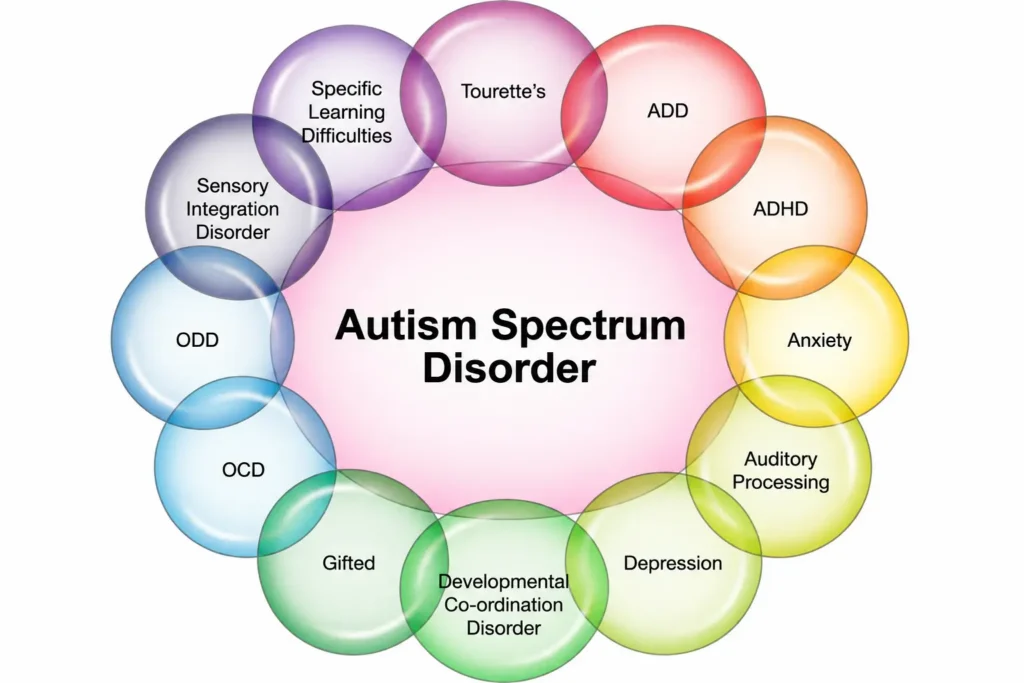
(Autism Spectrum Disorder, ASD) is a neurological disorder that influences the development of one’s brain and the way an individual perceives the world around them. All autistic people are unique. Some of them may require additional assistance with performing everyday tasks, while some will be capable of living and working on their own. Spectrum indicates the diversity of manifestations of autism in individuals. Some have mild symptoms, and others require additional support. That is why each person with autism is unique.
What Are the Symptoms of Autism Spectrum Disorder?
The signs of ASD appear in childhood but vary from one individual to another. The usual signs include poor eye contact, delayed speech or communication, and repetition of words or actions. There is a tendency to arrange toys rather than play with them. There is difficulty tolerating changes to the daily schedule. For adults, there is a difficulty in comprehending social skills, initiating conversations, and feeling comfortable around noise and crowds. Symptoms may be subtle in some individuals; therefore, they may go unnoticed initially but become noticeable in later years.
What Are the Causes of Autism Spectrum Disorder?
The specific reasons for autism spectrum disorder are not known at the moment. However, genetics have been proven to have a significant influence on it. If one of your siblings suffers from autism, then you have an increased likelihood of developing it as well. Brain development disorders can be considered an additional reason for autism. Moreover, older parents might increase the risks for autism. Vaccines cannot cause autism because they are not linked to the development of the disorder. This was proved by many scientific studies conducted over the last 20 years.
Types of Autism Spectrum Disorder Explained
Autism used to be split into separate diagnoses. Now doctors group them under one umbrella term. Some people have mild traits and live independently. Others need daily support with basic tasks. A few show strong skills in one area, like math or memory, alongside real challenges in another. That mix is part of what makes autism a spectrum.
How Is Autism Spectrum Disorder Diagnosed?
Diagnosis starts with watching how a child plays, talks, and interacts. A specialist asks parents detailed questions about early development. There’s no blood test for autism. Instead, doctors use behavior checklists and direct observation. Diagnosis can take a few visits. Early signs sometimes get missed, especially in girls, who often mask symptoms better than boys do.
Autism Spectrum Disorder Test: What to Expect
The typical procedure involves questionnaires, observations, and hearing/vision tests at times. The parents are required to fill the questionnaire related to developmental milestones such as when they started talking and making eye contact. This entire process takes two to three hours on different occasions. This is a non-threatening approach used to collect information.
Autism Spectrum Disorder Treatment: Effective Therapies and Support
Treatment looks different for every person. Speech therapy helps with communication. Occupational therapy builds daily living skills. Behavioral therapy, like ABA, teaches new skills step by step. Some people also benefit from social skills groups. Our autism support services build a plan around each person’s actual needs, not a generic checklist.
Can Adults Have Autism Spectrum Disorder?
Many adults are diagnosed with ASD, without knowing that they have the condition. While growing up as a child, people with ASD tend to be called shy, withdrawn, or socially clumsy instead of getting a diagnosis for autism. Adults with ASD often learn how to cover up the signs, making it difficult to diagnose autism. Getting a diagnosis as an adult can be liberating since it provides answers to many problems regarding communication, social interaction, routines, or sensory issues. An assessment for adult autism entails looking at childhood experiences and current behavior patterns.
Living With Autism Spectrum Disorder: Daily Support and Care
The day-to-day life is made easier through correct routine. Visual schedules decrease anxiety levels. Calm spots are needed by overburdened minds to regain balance. The support of family means more than many people think. The little changes made in the comfort of home work wonders than one session of therapy does.
When Should You See a Healthcare Professional?
See a provider if a child isn’t talking by age two, avoids eye contact, or loses skills they once had. Adults should reach out if social situations feel constantly exhausting or confusing. Early support leads to better outcomes at any age. Waiting rarely helps. Getting answers sooner gives more time to build the right support system.
Final Thoughts
There is no reason to be afraid of autism spectrum disorder. Provided that the disorder is accurately diagnosed and treated, a person with autism is capable of learning, development, building connections, and enjoying a productive life. Identification of the disorder at an early age is very important since it allows getting help from specialists in time both for adults and children. You should not neglect the symptoms of autism either in yourself or in your child. Consult specialists and get answers to your questions as soon as possible. Contact Grace Mental Wellness today to schedule an evaluation and get real answers.
Frequently Asked Questions
1. What is the main sign of autism spectrum disorder?
Trouble with communication and social interaction is usually the clearest sign.
2. Can autism be cured?
No, but therapy and support help people manage symptoms and thrive.
3. At what age is autism usually diagnosed?
Many cases get diagnosed between ages two and four.
4. Do vaccines cause autism?
No. Large studies have found no link between vaccines and autism.
5. Can adults get diagnosed with autism?
Yes, adult diagnosis is common and can bring real clarity and relief.