

Obsessive-compulsive disorder symptoms in daily life can affect thoughts, emotions, routines, relationships, work, and overall quality of life. OCD symptoms commonly involve unwanted, intrusive thoughts or fears called obsessions and repetitive behaviors or mental rituals called compulsions. These experiences can become time-consuming and may create significant distress when they interfere with everyday responsibilities.
Understanding OCD symptoms can help individuals recognize patterns that may need professional attention. With appropriate support and personalized treatment, many people can learn to manage symptoms and develop healthier ways to respond to intrusive thoughts and urges. For professional mental health support, visit Grace Mental Wellness LLC
Recognizing the Early Signs of Obsessive-Compulsive Disorder Symptoms
Early OCD symptoms may appear as recurring thoughts, doubts, fears, or urges that feel difficult to control. A person may repeatedly worry about contamination, safety, mistakes, order, morality, or causing harm. These thoughts can continue even when there is no reasonable reason to act on them.
Another sign can be a strong need to perform a particular action to reduce anxiety. For instance, repeated checking, washing, counting, arranging, or seeking reassurance may temporarily create relief. However, the relief often does not last, which can lead to another cycle of obsessive thoughts and compulsive behaviors.
Understanding Repetitive Thoughts and Intrusive Ideas
Intrusive thoughts are unwanted ideas, images, doubts, or impulses that can repeatedly enter the mind. They may feel disturbing or inconsistent with personal values. Having an intrusive thought does not mean that a person wants the thought to happen or intends to act on it.
OCD can cause the mind to treat uncertainty as something that must be resolved immediately. This may lead to repeated mental reviewing, analyzing, remembering, or seeking certainty. The person may spend substantial time attempting to determine whether a thought is meaningful or whether something could go wrong. Learning to identify intrusive thoughts as symptoms rather than facts can be one part of effective OCD management.
Identifying Repetitive Behaviors and Mental Rituals
Compulsions can involve visible actions or internal mental activities. Common behaviors may include repeated handwashing, checking locks, arranging objects, counting, repeating phrases, or following rigid routines.
Mental rituals can be less noticeable. These may include silently repeating words, reviewing events, mentally correcting thoughts, or repeatedly seeking internal reassurance. Although compulsions are often performed to reduce distress, they can reinforce the cycle of obsession and temporary relief. When compulsive patterns consume substantial time or interfere with normal activities, professional assessment can help clarify the symptoms and guide appropriate care.
OCD Symptoms That Can Disrupt Work and Routines
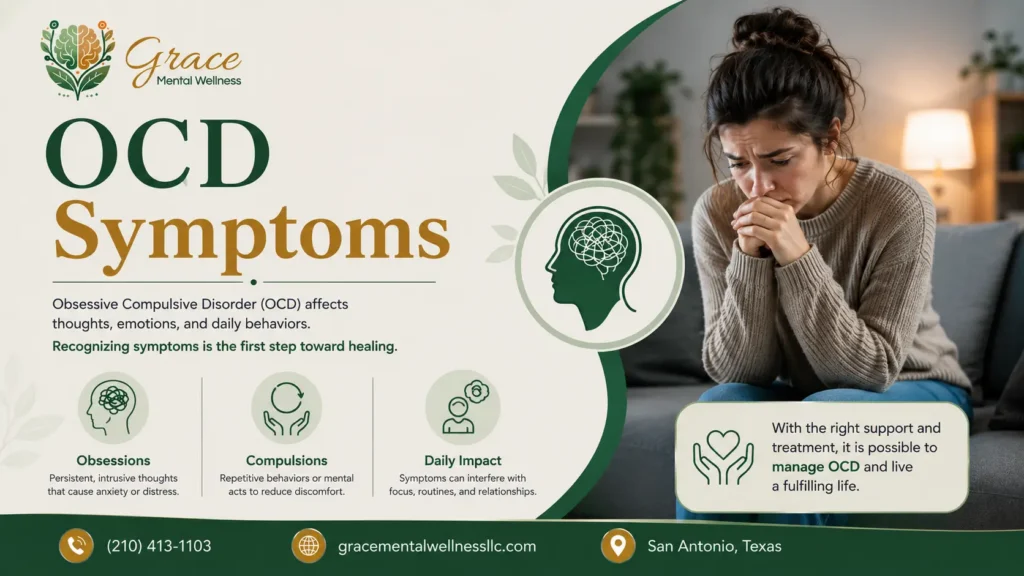
OCD symptoms may interfere with ordinary routines by making simple activities take much longer than expected. Repeated checking before leaving home, excessive cleaning, or returning to complete a ritual can delay work, appointments, school activities, and household responsibilities.
Concentration may also become difficult when intrusive thoughts remain active in the background. A person may spend considerable mental energy attempting to neutralize unwanted thoughts instead of focusing on the task at hand.
Work performance can be affected when rituals interrupt productivity or when distress makes it difficult to remain engaged. Establishing structured routines and receiving appropriate professional support can help reduce the impact of symptoms.
The Impact of OCD on Focus and Productivity
OCD symptoms can consume attention through persistent doubt and mental repetition. Even when someone is physically completing a task, obsessive thoughts may continue competing for attention.
For instance, a person may repeatedly wonder whether an email was written correctly, whether a door was locked, or whether a task was completed properly. Rechecking may provide short-term reassurance, but repeated checking can take additional time and make ordinary responsibilities more difficult.
Treatment can focus on reducing the cycle between obsessive thoughts, anxiety, compulsions, and temporary relief. A qualified mental health professional can help identify patterns and recommend an appropriate treatment approach.
How OCD Symptoms Influence Emotional Well-Being
Persistent OCD symptoms can contribute to anxiety, frustration, shame, guilt, and emotional exhaustion. Intrusive thoughts may feel frightening or upsetting, particularly when they conflict with personal beliefs or values.
The repeated effort required to manage obsessions and compulsions may also reduce time for relaxation, relationships, hobbies, and meaningful activities. Over time, this can contribute to isolation or reduced confidence.
Mental health support can provide a safe setting for understanding these experiences. Treatment may include psychotherapy, medication management, or a combination of approaches based on individual needs. For additional support related to psychiatric medication, Medication Management can be explored as part of a broader mental wellness plan.
Managing OCD Symptoms in Everyday Situations
Managing OCD begins with recognizing the cycle between intrusive thoughts and compulsive responses. Keeping a consistent daily routine, maintaining healthy sleep habits, and creating time for calming activities may support overall emotional wellness.
Professional treatment can also teach strategies for responding differently to obsessive thoughts. Cognitive behavioral approaches, particularly exposure and response prevention (ERP), are commonly associated with OCD treatment. ERP involves gradually facing feared thoughts or situations while reducing reliance on compulsive responses under appropriate professional guidance.
Avoiding triggers or repeatedly seeking reassurance may provide short-term comfort but can sometimes strengthen the OCD cycle. A personalized treatment plan can help address these patterns safely and gradually. For individuals experiencing overlapping anxiety concerns, Anxiety Disorder Treatment may also provide relevant information about available mental health care.
Professional Support for Persistent OCD Symptoms
Persistent OCD symptoms can be challenging to manage without professional guidance, particularly when they interfere with work, relationships, sleep, or daily responsibilities. A psychiatric assessment can help identify symptoms, understand their severity, and consider whether other mental health concerns may be present.
Treatment should be personalized rather than based on a single approach. Depending on individual circumstances, care may include psychotherapy, psychiatric medication, medication monitoring, or coordinated mental health services. Individuals experiencing depressive symptoms alongside OCD may also benefit from learning about Major Depressive Disorder Treatment.
Moving Toward Better Daily Functioning
OCD symptoms can affect many areas of daily life, but experiencing intrusive thoughts does not define a person’s character or intentions. Recognizing the difference between an unwanted thought and a deliberate action can be an important step toward understanding OCD.
Professional evaluation can provide clarity when symptoms become persistent, distressing, or disruptive. With appropriate treatment and ongoing support, it is possible to work toward better symptom management, improved concentration, healthier routines, and greater emotional balance.
Frequently Asked Questions
What are common OCD symptoms?
Common symptoms include intrusive thoughts, excessive fears, repeated checking, washing, counting, arranging, reassurance seeking, and mental rituals.
Can OCD affect work and productivity?
Yes. Repetitive thoughts and compulsive behaviors can consume time and attention, making work, study, and routine responsibilities more difficult.
Are intrusive thoughts a sign of intent?
No. An unwanted intrusive thought does not mean that a person wants the thought to occur or intends to act on it.
Can OCD symptoms be treated?
Yes. Professional treatment may include psychotherapy, exposure and response prevention, medication, or a combination of approaches.
When should professional support be considered?
Support may be appropriate when OCD symptoms cause significant distress, consume substantial time, or interfere with relationships, work, sleep, or daily activities.